
Workflow Automation & Systems Integration
Loading...
Loading...
Loading...
Loading...
Loading...
Loading...
Loading...
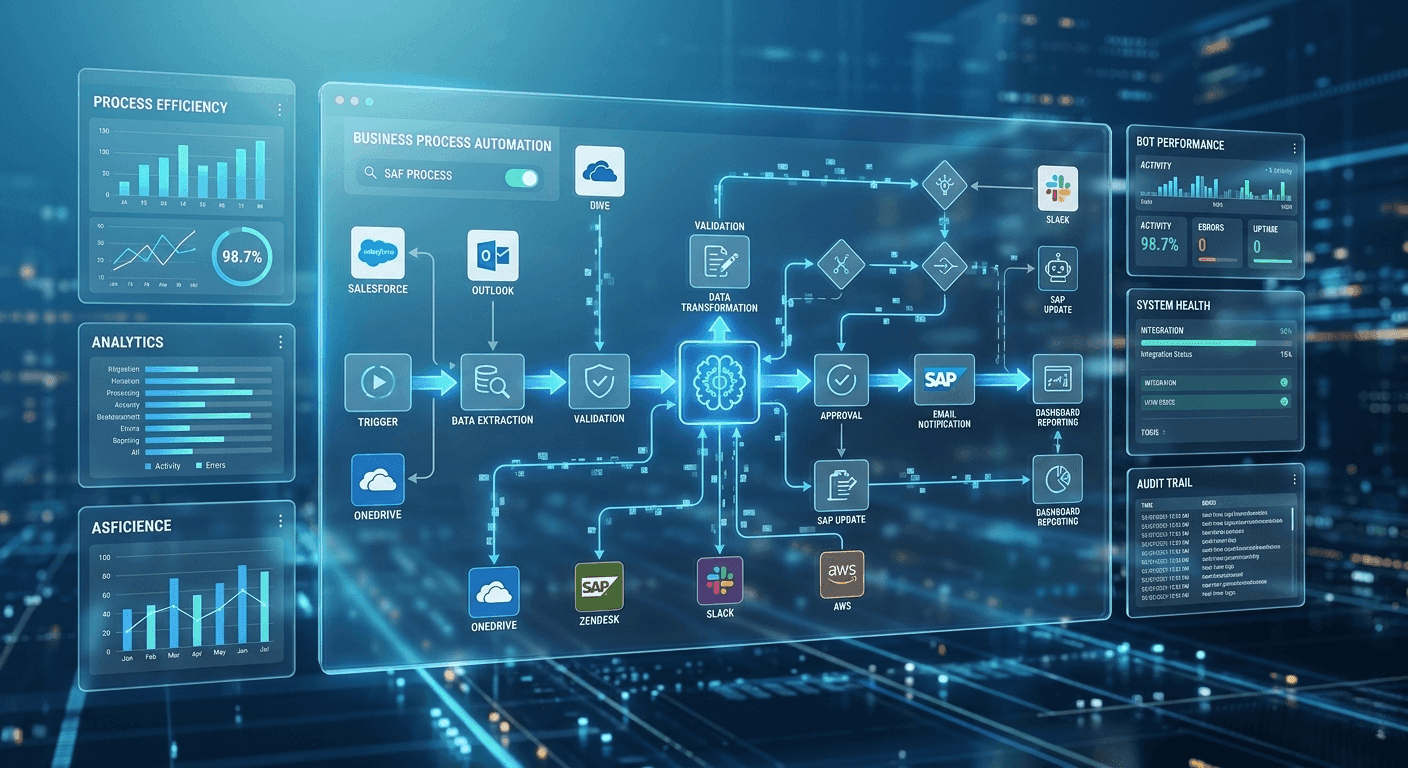
Optimise how work moves across teams, platforms, and processes through structured workflow automation and modern systems integration.
Many business processes rely on repetitive tasks, disconnected systems, and manual follow-ups to keep work moving. Workflow automation and systems integration help streamline how activities are completed across teams and platforms. By connecting processes and reducing reliance on manual intervention, organisations can improve efficiency, minimise delays, and maintain better control over day-to-day operations.
Structured workflow automation ensures that tasks move consistently and efficiently across systems, departments, and operational activities. By integrating key business applications and automating routine process steps, organisations can reduce bottlenecks, improve coordination, and maintain greater visibility over how work progresses.
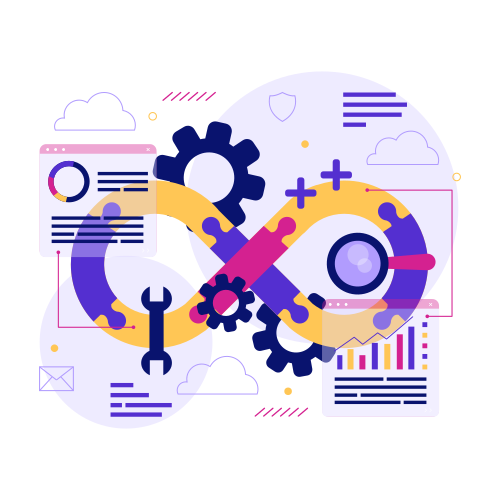
Workflow automation and systems integration focus on improving how work moves across your business.
Workflow automation helps reduce the need for manual coordination by allowing routine activities to be handled automatically. This may include task routing, notifications, approvals, or data updates that support day-to-day operations. Instead of relying on individuals to manage each step, automated workflows ensure that processes continue to move forward efficiently. This improves productivity and allows teams to focus on higher-value responsibilities.
Systems integration ensures that key business applications can share information and operate together effectively. Finance platforms, customer systems, operational tools, and internal applications often function independently, requiring manual data transfer between them. Connecting these systems helps create a more reliable and consistent flow of information. This reduces duplication of work, improves data accuracy, and enables better visibility across the business.
By structuring workflows and aligning business systems, organisations can create a more connected and reliable way of operating.

Workflow automation connects business processes so tasks move seamlessly between systems and people. Systems integration ensures your tools and platforms communicate effectively — reducing duplication, errors, and delays. Examples include:
Automating internal approvals and operational workflows
Connecting business applications to eliminate manual data entry
Streamlining onboarding, reporting, or service processes
Automatically manage service requests by routing tasks to the right teams and tracking progress.
Supporting AI initiatives with structured automation foundations
If your Business is ready to streamline processes, reduce manual effort, and improve operational flow, MSEG can help you design automation that delivers real outcomes.
Workflow automation and systems integration are typically introduced through a series of practical steps that focus on real business processes and everyday operational needs

Eliminate time-consuming and repetitive manual tasks by introducing more streamlined and automated ways of working. This allows employees to focus their time and effort on higher-value activities instead of routine operational processes.

Strengthen consistency across business processes by ensuring tasks are carried out in a more standardised and reliable manner. This helps reduce errors, improves quality, and ensures the same level of performance across different teams and departments.

Enhance overall operational efficiency by simplifying workflows, reducing unnecessary steps, and making better use of available resources. This leads to faster execution, improved productivity, and more effective day-to-day business operations.

Build workflows that are flexible and scalable enough to support future business growth and changing operational demands. This ensures that as the organisation expands, its processes can adapt efficiently without requiring major restructuring or additional manual effort.
Practical, structured, and business-aligned
Key workflows, manual activities, and business applications are reviewed to identify where coordination can be improved and where automation can reduce effort.
Process steps are organised so that tasks move logically between teams and systems, ensuring information is available at the right time.
Repetitive activities such as approvals, notifications, and data updates are automated while systems are connected to enable reliable information flow.
As your Business evolves, automation can expand to support new processes and capabilities.